Eloping in Japan: The Complete Guide for International Couples (2026)
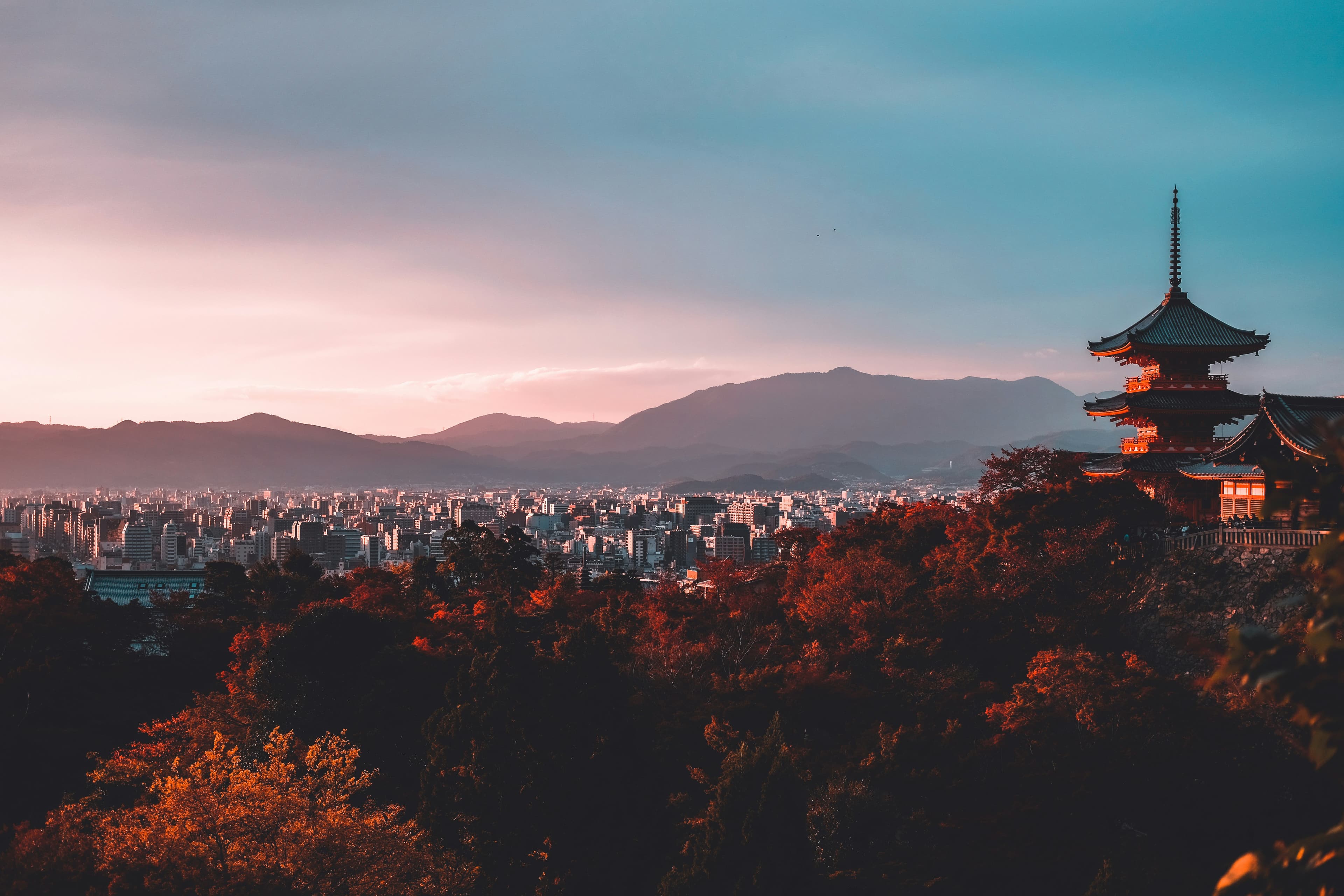
You want to elope in Japan. Maybe you've been scrolling through photos of cherry blossoms and bamboo groves and Kyoto temple gates, and the idea of a big wedding back home feels like planning someone else's party. Or maybe you've run the numbers and realized a Japan elopement costs about the same as catering alone at a venue in the U.S. or UK.
Either way, you're in the right place. We're Eamon and Juri Blackwell. Eamon is British-American. Juri is Japanese, a former Miss Universe Japan. We run Married in Japan, a bilingual wedding planning company based in Tokyo. We've planned elopements in Kamakura, multi-city weddings across Tokyo, Kyoto, and the Japanese Alps, and everything in between.
This guide covers what you actually need to know to elope in Japan as a foreigner: legal requirements, ceremony types, locations, costs, timing, and the practical details that most guides leave out. We wrote it because most of the content out there is either a photographer's portfolio page dressed up as a guide or a planning company's sales funnel. This is neither. It's the resource we wish existed when couples first come to us with questions.

Do You Even Need to Legally Marry in Japan?
This is the first question to answer, and most couples are surprised by how simple it makes everything.
The short answer: probably not. Most international couples who elope in Japan hold a symbolic ceremony here and handle the legal paperwork in their home country. Japan does not require a legal marriage for you to have a ceremony, wear a kimono, exchange vows at a shrine, or do anything else you picture when you think of eloping in Japan.
A symbolic ceremony gives you complete flexibility. You can hold it anywhere: a private garden, a forest clearing, a rooftop overlooking Tokyo, a beach in Okinawa. There are no government documents, no embassy visits, no waiting periods. You fly in, have your ceremony, and handle the legal side at a courthouse back home whenever it's convenient.
That said, some couples want to make it official in Japan. If that's you, read on. It's doable, but the paperwork takes planning.
How to Legally Marry in Japan as a Foreigner
Two foreigners can legally marry in Japan. There is no residency requirement. You can do it as a tourist. The process is entirely civil: your marriage becomes legal when you register it at a municipal ward office (called a kuyakusho in Japanese). No ceremony of any kind is required for it to be legally valid.
Here is the step-by-step process.
Step 1: Get Your Embassy Documents
Before you can register, each partner needs a document proving you're legally free to marry. Most countries call this a Certificate of No Impediment (CNI) or an Affidavit of Competency to Marry. You get it from your country's embassy or consulate in Japan.
This is where it gets country-specific, and the details matter.
British citizens: Apply online (£50 fee) for an Affirmation of Marital Status, then book an appointment at the British Embassy in Tokyo. Appointments are available on Tuesdays and Wednesdays only, and you need to apply at least 7 days before your appointment date. Bring your passport, birth certificate, and proof of address. The appointment takes about 30 minutes. Confirm current requirements at gov.uk before booking.
Australian citizens: Apply for a CNI at the Australian Embassy in Tokyo or Consulate-General in Osaka. Fee is A$181. Do not pre-sign page 3 of the application form. You sign it in front of the consular officer. The certificate is valid for 3 months. Check smartraveller.gov.au for the latest.
Canadian citizens: Canada does not issue a Certificate of No Impediment. Instead, the embassy provides a "Statement in Lieu." Some Japanese ward offices may not accept this. Verify with your chosen ward office in advance, or consider handling the legal marriage in Canada.
Step 2: Get the Marriage Registration Form
Pick up a marriage registration form (kon-in todoke) from any municipal ward office. The form must be completed in Japanese. If you're working with a planner, they will handle this. If you're doing it yourself, you'll need help from a Japanese speaker.
Step 3: Find Two Witnesses
Japanese law requires two adult witnesses (age 18 or older) to sign the form. They can be any nationality. Your planner, photographer, hotel concierge, or friends can serve as witnesses. They do not need to be present at a ceremony. They just need to sign the form.
Step 4: Submit Everything at the Ward Office
Bring the following to the municipal ward office:
- Passports for both partners
- Embassy documents (CNI, affidavit, or equivalent) for each partner
- Birth certificates for both partners (some offices require these, some don't)
- Japanese translations of all foreign-language documents (self-translation is accepted, but you must note the translator's name)
- Divorce decree or death certificate if either partner was previously married
- The completed marriage registration form with witness signatures
The date you submit is your official wedding date. The entire submission process takes about 30 minutes to an hour, depending on the office.
Step 5: Get Your Marriage Certificate
After registration, you can request a marriage certificate (kon-in todoke juri shomeisho). The standard version costs ¥350. A decorative version, which makes a nice keepsake, costs ¥1,400.
Important Things to Know
Ward offices are not consistent. Requirements can vary between offices, even within Tokyo. Central Tokyo wards (Shibuya, Minato, Shinjuku, Chiyoda) handle more foreign registrations and tend to be more familiar with the process.
Documents you submit may not be returned. Ask about a retention form (genpon kanpu) if you need your originals back.
The entire process, from embassy appointment to registered marriage, takes 3 to 5 business days in most cases. Plan your trip accordingly.
For the full process of getting legally married in Japan, including detailed document requirements, see our complete guide: Getting Married in Japan as a Foreigner.

Types of Elopement Ceremonies in Japan
Japan offers several ceremony styles. Here's what each one involves and who it's best for.
Symbolic Ceremony (Non-Religious)
This is what the majority of international elopement couples choose. There is no legal component, no officiant requirement, and no restrictions on location. You write your own vows, exchange rings, and hold the ceremony wherever you like.
A symbolic ceremony can be as simple as reading vows to each other in a bamboo grove with a photographer present. Or it can be a full production with a celebrant, flowers, a tea ceremony element, and a multi-course kaiseki dinner afterward. The flexibility is the entire point.
Best for: couples who want maximum creative freedom and minimal paperwork.
Shinto Shrine Ceremony
A traditional Shinto ceremony (shinzen shiki) is a 20-to-30-minute ritual conducted by a Shinto priest at a shrine. It includes purification rites, the san-san-kudo (a ceremonial sake exchange involving three cups, three pourings, and three sips each), an exchange of vows read by the groom, a ring exchange, and a sacred sakaki branch offering. A shrine maiden (miko) assists throughout.
Foreigners are welcome at many shrines, regardless of religious background. However, not all shrines accept foreign couples, and bookings are almost always handled in Japanese. A bilingual planner is close to essential for this.
The bride traditionally wears a shiromuku (white kimono) or iro-uchikake (colorful formal kimono). The groom wears montsuki hakama (formal kimono with family crest). Western attire is accepted at some shrines but not all. Confirm with the specific shrine.
Ceremony fees range from ¥200,000 to ¥500,000 (roughly $1,400 to $3,500 USD), based on our 2026 vendor research. This is for the ceremony only and does not include kimono rental, hair and makeup, or photography.
Best for: couples who want an authentic Japanese cultural experience.
Buddhist Temple Ceremony
Less common for international couples, but available at certain temples. Shunkoin Temple in Kyoto is the most frequently cited option for English-language Buddhist wedding ceremonies. The ceremony incorporates elements of Zen Buddhist philosophy and is more contemplative in tone than a Shinto ceremony.
Best for: couples with a connection to Buddhist practice or who prefer a quieter, more meditative experience.
Tea Ceremony Elopement
Some couples incorporate a traditional tea ceremony (chado) into their elopement day. The preparation and sharing of matcha symbolizes harmony, respect, purity, and tranquility. This is usually woven into a broader elopement experience rather than standing alone as the ceremony itself.
Best for: couples who value ritual and want a calm, intentional moment together.
Christian Chapel Ceremony
Japan has purpose-built wedding chapels, often inside hotels, despite being only about 1-2% Christian. These offer a Western-style ceremony with a processional, vows, and a gown. The officiant is typically a non-ordained Western person hired for the role. These ceremonies are entirely symbolic.
Best for: couples who want a Western-style ceremony in a Japanese setting.
Best Locations to Elope in Japan
Japan's geography gives you an unusual range of options within a small country. You can exchange vows under cherry blossoms in Kyoto on Tuesday and be at a tropical beach in Okinawa by Thursday.
Kyoto
The most requested elopement destination, and for good reason. The city has an extraordinary density of temples, shrines, bamboo groves, and traditional gardens within a compact area. Top spots include the Arashiyama Bamboo Grove (arrive at dawn for any real privacy), the Higashiyama District with its lantern-lit lanes, and the Philosopher's Path during cherry blossom season. If you are inviting guests after all, our Kyoto wedding venues guide compares shrines, gardens and hotels with all-in prices.
Important for 2026: Kyoto is implementing stricter rules on professional photography and ceremonies at cultural sites. Prior permission is now explicitly required at many locations. Showing up with a photographer and wedding attire without advance coordination can result in being turned away. Work with a local planner who has existing relationships with these sites.
Tokyo
Tokyo elopements range from serene to cinematic. Meiji Shrine sits in the middle of a forest that happens to be in central Tokyo. Shinjuku Gyoen has 65 cherry tree varieties and the longest bloom window in the city. Hamarikyu Gardens offers a skyline-meets-traditional-garden contrast that photographs beautifully. For something different, Yanaka's old-town streets or a neon-lit rooftop in Shibuya give you a completely different mood.
Kamakura
About an hour south of Tokyo by train. The Great Buddha, Hase-dera Temple with its ocean views (spectacular during June hydrangea season), and the quiet coastal paths along Yuigahama Beach make Kamakura one of the most underrated elopement locations in Japan. We planned a coastal temple elopement here: a private setting with the sound of waves, just the couple, in traditional kimono. It's a different energy than Kyoto. Quieter. More personal.
Okinawa
If your idea of eloping involves turquoise water and white sand, Okinawa is the answer. Miyakojima has uncrowded beaches. Ishigaki Island has a phantom island that appears at low tide. Taketomi Island is a preserved Ryukyu village with stone walls and red tile roofs. Best from October to April (Okinawa's dry season).
Hakone and the Mt. Fuji Area
Lake Kawaguchiko with Mt. Fuji as a backdrop, the iconic Chureito Pagoda in spring, and Hakone's hot spring ryokan for a post-ceremony soak. Be aware that Mt. Fuji is only visible about 30% of days. Winter and early morning offer the best odds. A planner will build flexibility into your schedule for this.
Nara
Free-roaming sacred deer among 1,300-year-old temples. Nara has a storybook quality that surprises people who only know Kyoto. It's also far less crowded. Mount Wakakusa and the temple backstreets make for some of the most distinctive elopement photos in Japan.
Hokkaido
Dramatically different from the rest of Japan. Niseko offers a volcanic mountain backdrop and powder snow in winter. Furano has lavender fields in July and sunflowers in August. If you want adventure over tradition, Hokkaido is the place.
Off-the-Beaten-Path Options
The Izu Peninsula (volcanic cliffs, hidden beaches, Fuji views), Yakushima (UNESCO ancient cedar forests), the Kiso Valley (mountain post towns), and Ginzan Onsen (a snow-covered hot spring village in winter) are all locations that very few elopement companies feature. If you want something that doesn't look like every other Japan elopement on Instagram, these are worth exploring.

When to Elope in Japan
Cherry Blossom Season (Late March to Early April)
The most iconic time, and the most requested. Tokyo typically peaks around March 26 to April 2. Kyoto follows about a week later. Full bloom lasts only 5 to 7 days and shifts every year depending on weather. Our season-by-season guide to when to get married in Japan has weather and crowd notes for every month.
The trade-offs are real: peak crowds, highest prices, and vendors book 6 to 12 months in advance. If you want cherry blossoms, book early and consider sunrise sessions, weekday ceremonies, or locations outside the major tourist corridors. Hokkaido's cherry blossoms come in late April to early May and offer a much quieter alternative.
Autumn Foliage (Mid-October to Early December)
Arguably more photogenic than cherry blossoms, with a significantly longer viewing window (2 to 4 weeks per area versus 5 to 7 days for sakura). Kyoto's foliage peaks in late November. Temperatures are comfortable, skies are clear, and the colors, deep reds, oranges, and golds, photograph beautifully.
Winter (December to February)
Dramatic snow landscapes in Hokkaido, Nagano, and the Japanese Alps. Onsen (hot spring) experiences. Far fewer tourists. Lower prices.
Be aware that many shrines close for New Year preparations from around December 15, and most venues are closed from December 28 through January 3 or 4. Daylight hours are shorter. But if you want a quiet, atmospheric elopement with snow and hot springs, winter is hard to beat.
Summer (June to August)
Generally not recommended. June through mid-July is rainy season (tsuyu). Late July and August bring extreme heat and humidity, often above 30°C with high humidity that will have you and your photographer wilting. Typhoon risk runs from August through October. Hokkaido stays cooler and is an exception.
Best Off-Peak Windows
January to February (dry, cold, beautiful snow, cheapest), May after Golden Week (pleasant weather, no sakura crowds), and early October (warm, pre-foliage, fewer tourists) are all excellent times that most guides won't highlight.
How Much Does It Cost to Elope in Japan?
The costs below are based on our 2026 vendor research and client proposals. They cover what international couples typically spend. Ranges vary by season, location, and the level of service you choose.
Budget Elopement: $6,000 to $8,000 USD
A symbolic ceremony at a public location. Half-day photography (2 to 3 hours). No planner. You bring your own attire and handle logistics yourselves. Budget accommodation. This works best for couples who are comfortable navigating Japan independently and don't need a traditional ceremony.
Mid-Range Elopement: $8,000 to $15,000 USD
Professional photography (full day). A bilingual planner or coordinator. One or two ceremony locations. Kimono or dress rental with hair and makeup. A shrine ceremony or private garden venue. This is where most of our elopement couples land.
| Category | Typical Range (USD) |
|---|---|
| Photography (full day) | $3,500 to $5,500 |
| Planner/coordinator | $2,000 to $5,000 |
| Shrine ceremony fee | $1,400 to $3,500 |
| Kimono rental + dressing + hair/makeup | $900 to $1,800 |
| Private venue or garden | $350 to $1,400 |
Luxury Elopement: $15,000 to $30,000+ USD
Full-day photography and videography. A dedicated planner handling every detail. Multiple locations across one or two cities. Both kimono and Western attire with professional styling. Private venue hire. Cultural experiences woven in (tea ceremony, kaiseki dinner, sake tasting). Luxury ryokan accommodation. This is the level where your elopement becomes a multi-day experience.
What These Estimates Do Not Include
Flights, accommodation, meals outside a celebration dinner, and personal travel expenses are not in these ranges. Round-trip flights from the U.S. West Coast run roughly $800 to $1,500. From the East Coast, $1,000 to $2,000. From the UK, £600 to £1,200. From Australia, A$800 to $1,800.
For a deeper cost breakdown covering full destination weddings at various guest counts, see our guide: How Much Does a Destination Wedding in Japan Cost? (coming soon).

Elopement vs. Micro Wedding vs. Destination Wedding
If you're not sure which category you fall into, this comparison may help.
| Factor | Elopement | Micro Wedding | Destination Wedding |
|---|---|---|---|
| Guest count | Just the two of you (plus photographer/planner) | 5 to 20 guests | 20 to 100+ guests |
| Planning timeline | 2 to 4 months | 4 to 8 months | 8 to 14 months |
| Typical budget | $6,000 to $15,000 | $10,000 to $25,000 | $25,000 to $60,000+ |
| Venue requirements | Flexible (public, private, or indoor) | Private venue needed | Dedicated venue with capacity |
| Planner recommended? | Optional for symbolic, recommended for shrine | Recommended | Essential |
| Legal paperwork | Optional (most do symbolic) | Same as elopement | Same as elopement |
Married in Japan works across all three. Our elopement packages start at $6,000 USD. If you're leaning toward a micro wedding or something bigger, our guide to the best wedding venues in Japan covers larger-capacity options.
Do You Need a Planner for a Japan Elopement?
This is a fair question, and the honest answer depends on what you want.
If you're planning a symbolic ceremony at one or two outdoor locations with your own attire and a photographer you've booked directly, you can manage without a planner. Especially if you've traveled in Japan before and are comfortable with the logistics.
If you want a shrine or temple ceremony, kimono rental with professional dressing, hair and makeup, coordination between multiple vendors, or help navigating the legal marriage process, a bilingual planner becomes close to essential. Almost all shrine bookings are conducted in Japanese. Wedding kimono require professional fitters. Ward office staff rarely speak English. And increasingly, cultural sites require advance permits for professional photography.
The language barrier is the single most cited challenge in every forum discussion and couple account we've read. It's not that Japan is difficult. It's that the wedding-specific logistics (shrine protocols, vendor coordination, legal documents) operate almost entirely in Japanese.
Our approach at Married in Japan is that Juri handles all Japanese-language communication, vendor negotiations, and on-the-ground coordination. Eamon manages client communication, strategy, and logistics planning. The combination of a native Japanese speaker and a native English speaker working together as a team is what makes the process smooth for international couples. You can see how it works on our Japan elopement planning page.
A Sample Elopement Day in Japan
To give you a sense of how a day actually unfolds, here's a composite based on elopements we've planned and the most common structures our couples choose.
6:30 AM: Meet your photographer and planner at a private location or hotel. Hair and makeup for the bride begins. The groom gets ready in a separate space.
8:00 AM: First look and photos at a location chosen for early-morning light and minimal crowds. In Kyoto, this might be the Arashiyama Bamboo Grove. In Tokyo, Meiji Shrine's forest path.
9:30 AM: Travel to the ceremony location. If it's a shrine ceremony, the Shinto priest guides you through the ritual. If symbolic, you exchange vows in a garden, on a temple terrace, or wherever feels right.
10:30 AM: More photos at a second location while the light is still good. This is often when couples change from kimono into Western attire, or vice versa.
12:00 PM: A quiet lunch together at a restaurant your planner has booked. This might be a private kaiseki meal, sushi at a neighborhood counter, or ramen at a spot only locals know about.
2:00 PM: Optional cultural experience. A private tea ceremony, calligraphy session, or sake tasting. Or simply free time to explore together.
6:00 PM: Celebration dinner. This is often the emotional high point of the day. A private dining room, a rooftop with a view, or a multi-course meal at a place with a Michelin star or two.
Not every elopement follows this structure. Some couples want two hours and a bamboo grove. Others want three days across multiple cities. The day is yours.
2026 Regulatory Update: What's Changing
If you've been researching Japan elopements, you should know that rules around ceremonies and professional photography at cultural sites have been tightening, particularly in Kyoto.
Several popular locations now require advance permission for professional photography sessions. Some have restricted or banned wedding ceremonies entirely on their grounds. This is a response to overtourism and the disruption caused by frequent photo shoots at heavily visited sites.
This isn't a reason to avoid Japan. It's a reason to plan properly. The most experienced planners and photographers in Japan know which locations are still accessible, which ones require permits, and which alternatives offer the same beauty without the restrictions.
Frequently Asked Questions
Can two foreigners legally get married in Japan?
Yes. Japan allows two foreign nationals to register a marriage at a municipal ward office. There is no residency requirement. Tourists can do it. The process requires embassy documents, Japanese translations, and two witnesses. Most couples complete it in 3 to 5 business days.
Do you need a visa to elope in Japan?
For a symbolic ceremony, a standard tourist visa or visa waiver is sufficient. U.S., UK, Australian, and Canadian citizens can enter Japan visa-free for tourism stays of up to 90 days. If you are filing for a legal marriage, you can still do so on a tourist visa. No special visa category is required.
Can LGBTQ+ couples elope in Japan?
Japan does not legally recognize same-sex marriage as of 2026, so a legal registration at a ward office is not available for same-sex couples. However, symbolic ceremonies are widely welcomed by planners and photographers throughout Japan. Many vendors in this space actively market to and celebrate LGBTQ+ couples.
How far in advance should you book?
For cherry blossom season (late March to early April), 6 to 12 months in advance. For autumn foliage (October to November), 4 to 6 months. For off-peak times, 2 to 4 months is usually sufficient. The key bottleneck is photographer and planner availability, not venue bookings.
What should you wear?
You have four main options: a traditional Japanese wedding kimono (shiromuku or iro-uchikake), a casual rental kimono, a Western wedding dress or suit brought from home, or a combination (kimono for the ceremony, Western attire for photos or dinner). Most couples who choose kimono rent through their planner, which includes professional dressing and hair styling.
Can you elope in Japan during cherry blossom season?
Yes, and it's beautiful. But full bloom lasts only 5 to 7 days and the exact timing shifts every year. Book your planner and photographer well in advance, keep your schedule flexible, and consider sunrise or early-morning sessions to avoid the worst crowds.
What if it rains on your elopement day?
Rain in Japan can be atmospheric, especially in Kyoto. Translucent wagasa (Japanese umbrellas) make for striking photos. Experienced photographers plan for weather and have indoor backup locations ready. A rainy elopement in Japan can be more memorable than a sunny one.
Is a Japan elopement cheaper than a traditional wedding?
In most cases, significantly so. The average U.S. wedding costs over $30,000. A mid-range Japan elopement, including flights and accommodation, comes in at roughly $10,000 to $18,000 total. You also get a trip to Japan out of it.
Sources and Further Reading
For legal requirements, we recommend checking the following official sources before your trip, as processes can change:
- U.S. Embassy Tokyo: Marriage in Japan (jp.usembassy.gov)
- British Embassy Tokyo: Getting Married Abroad (gov.uk)
- Australian Embassy Tokyo: Notarial Services (japan.embassy.gov.au)
- Government of Canada: Marriage Overseas (travel.gc.ca)
For more from Married in Japan: