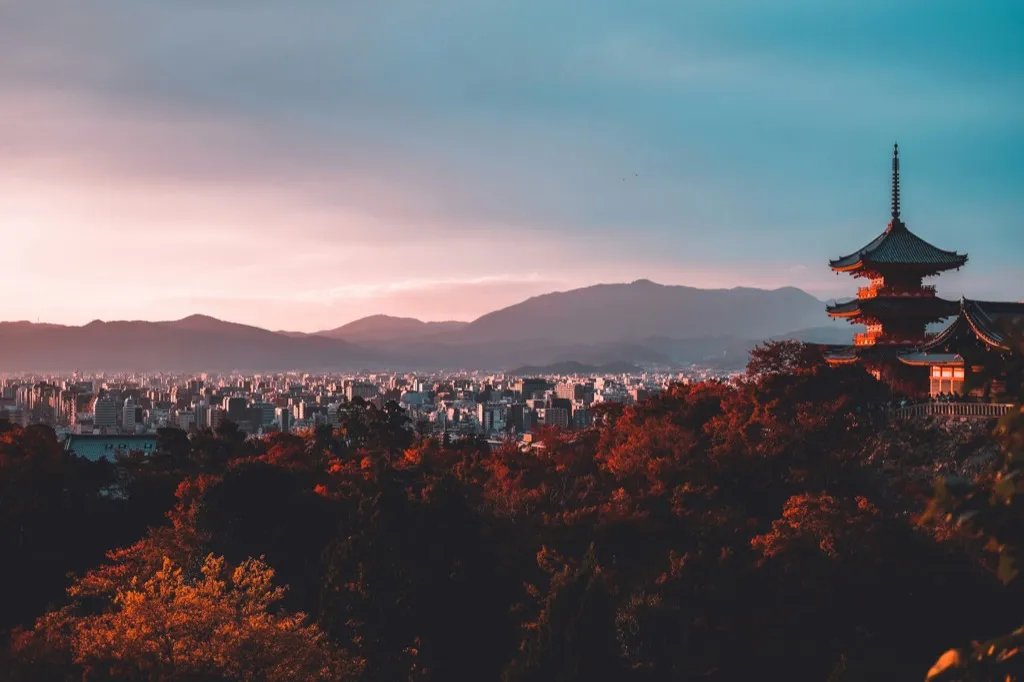
Kyoto
Temple grounds, machiya courtyards and moss gardens.
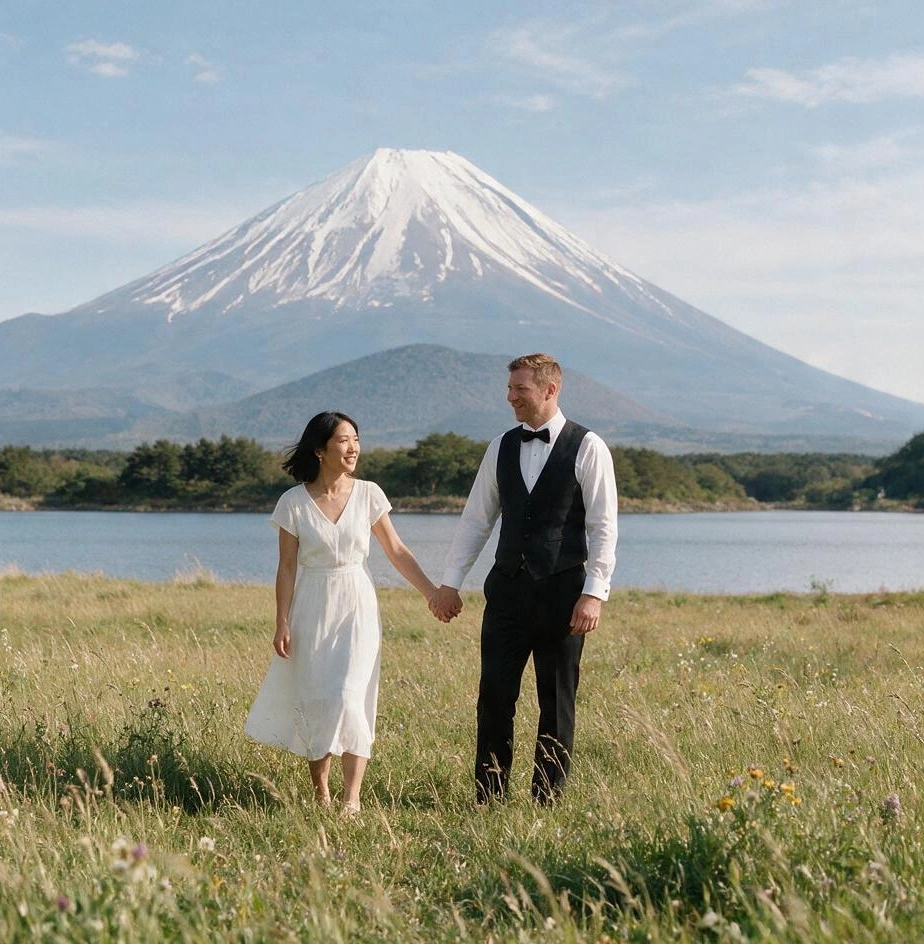
Elopements in Japan
Intimate elopements across Japan, planned end to end by a bilingual team who live here.
Planning from $5,000 USD · Free 30-minute call
What we handle
Shrine, garden, mountain or coastline. We shortlist, introduce, hold and contract, in Japanese.
Location permits, shrine protocol, and the registration route for your nationality.
Photographer, florist, hair and makeup, celebrant, styling. Vetted people, fully briefed.
We're there. Timings, transport, vendors and translation, so you're managing nothing.
No aisle, no seating chart, no eighty people watching. Just the day you actually wanted.
How it works
Tell us the day you want and roughly when. We'll say plainly whether we're the right fit.
Location options with real availability and a vendor team, built around what you described.
A detailed scope and a real number. Nothing is booked until you've seen both.
We run the day. You get married in a country you love.
Where
The four we're asked for most. If you have somewhere else in mind, tell us and we'll find out whether it can be done.
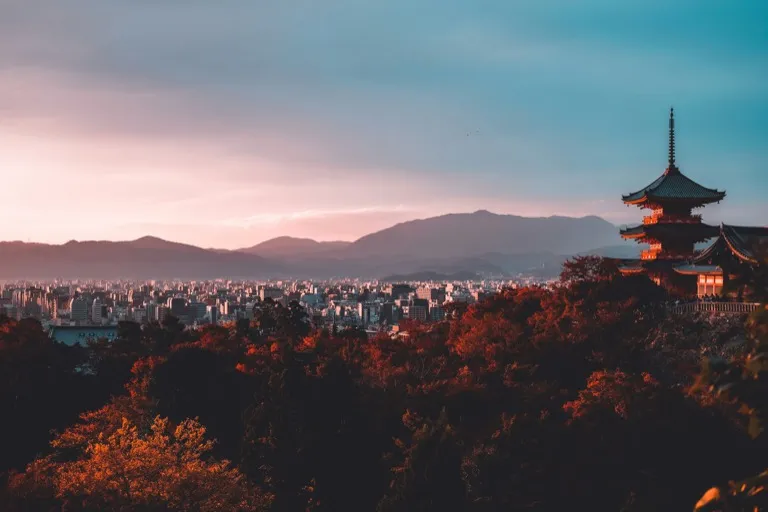
Temple grounds, machiya courtyards and moss gardens.
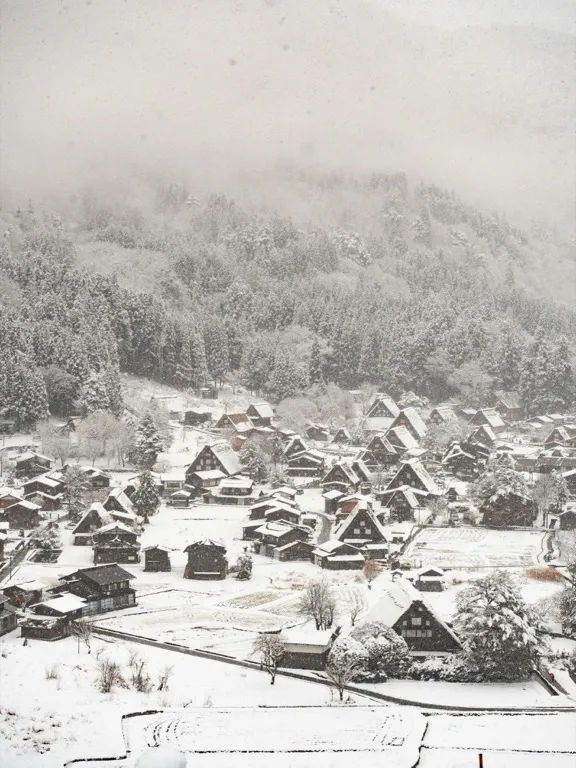
Alpine light, cedar forest and near-total privacy.
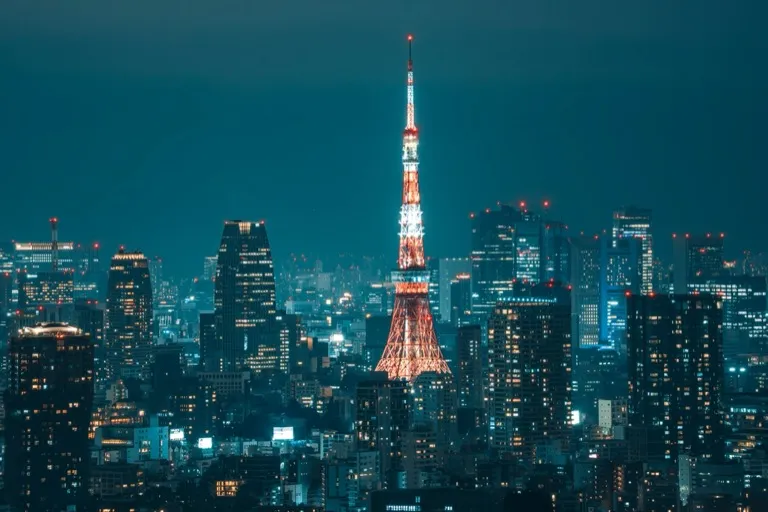
City rooftops, quiet shrines and a skyline that needs no caption.
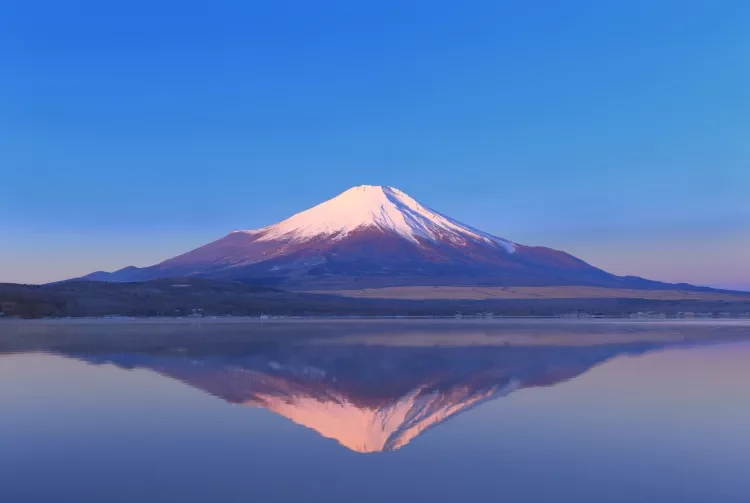
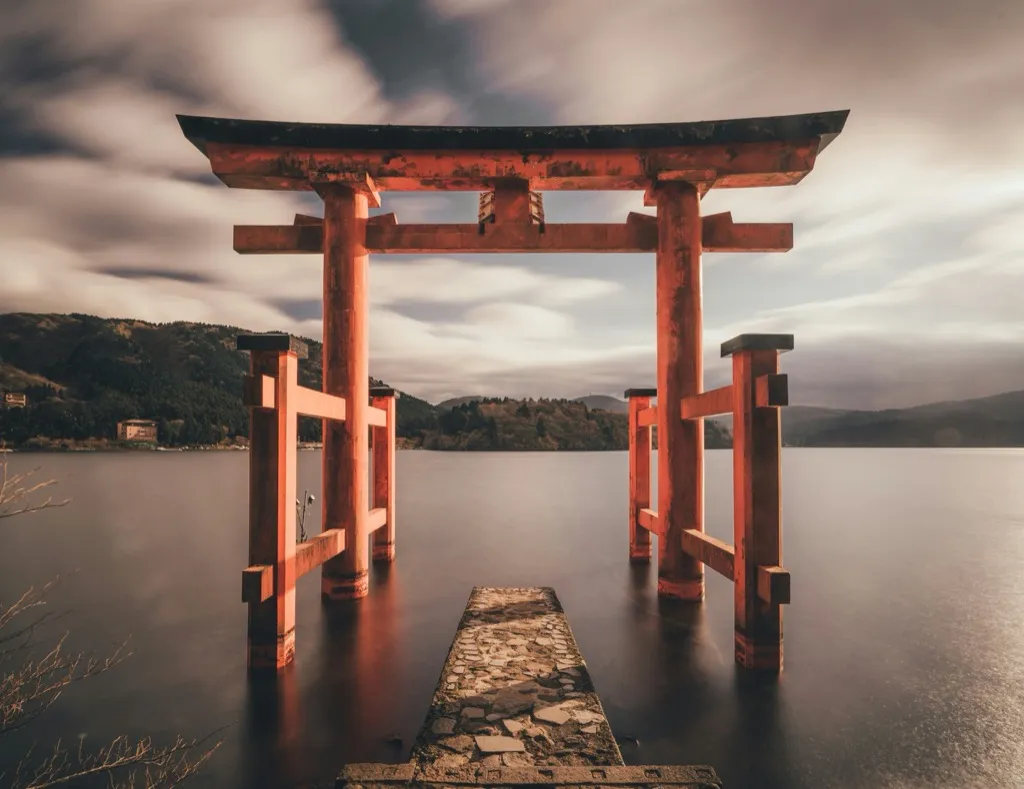
Fuji views, hot spring ryokan, an hour from the city.
Shrine weddings
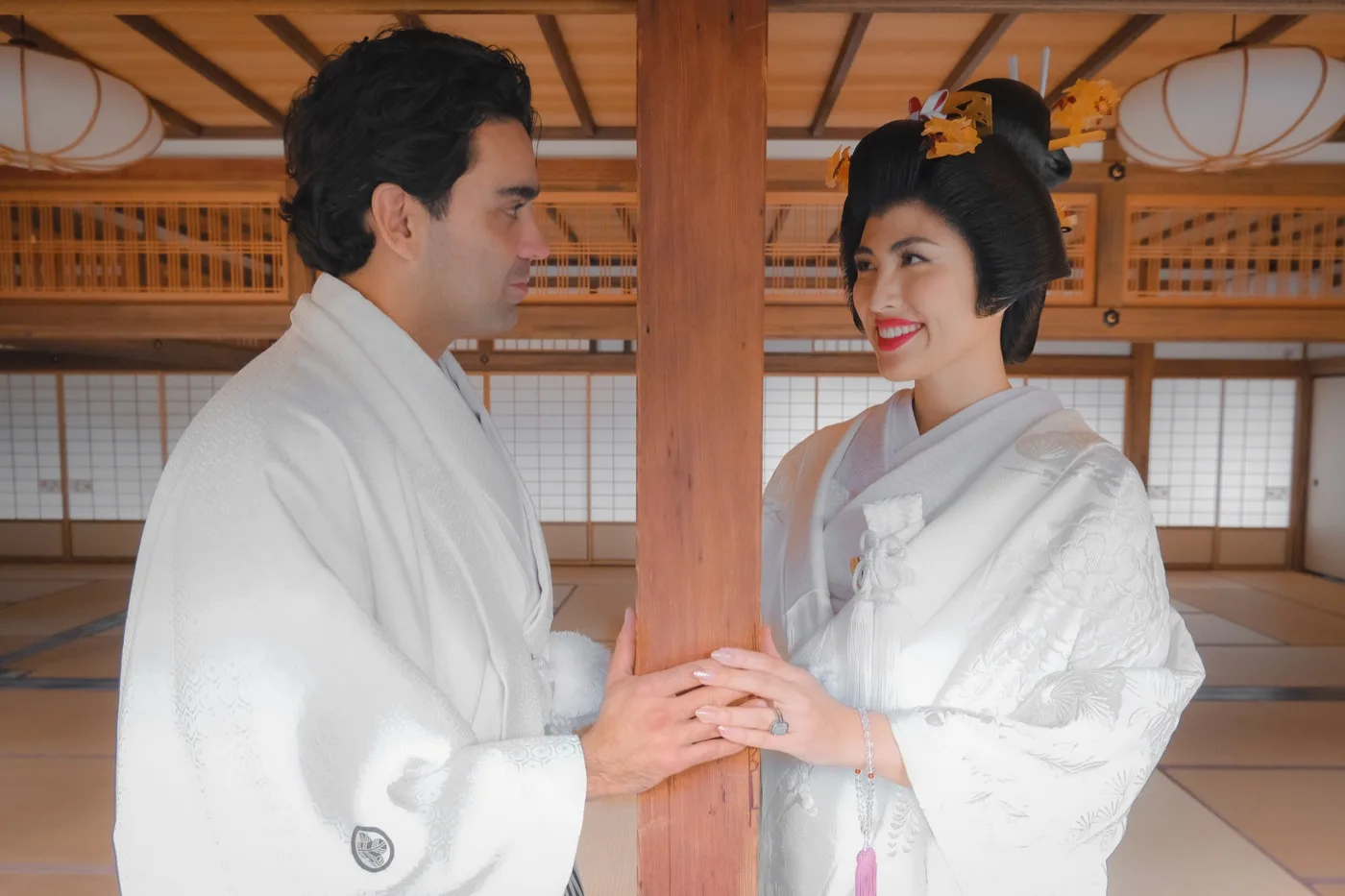
We also plan shinzenshiki, the Shinto wedding rite, at working shrines in Kyoto. It is the same ceremony Japanese couples have celebrated for centuries, conducted by a priest in the shrine's own hall. A real ceremony announced to the kami, not a photoshoot styled to look like one.
The rite runs 30 to 45 minutes. Inside it:
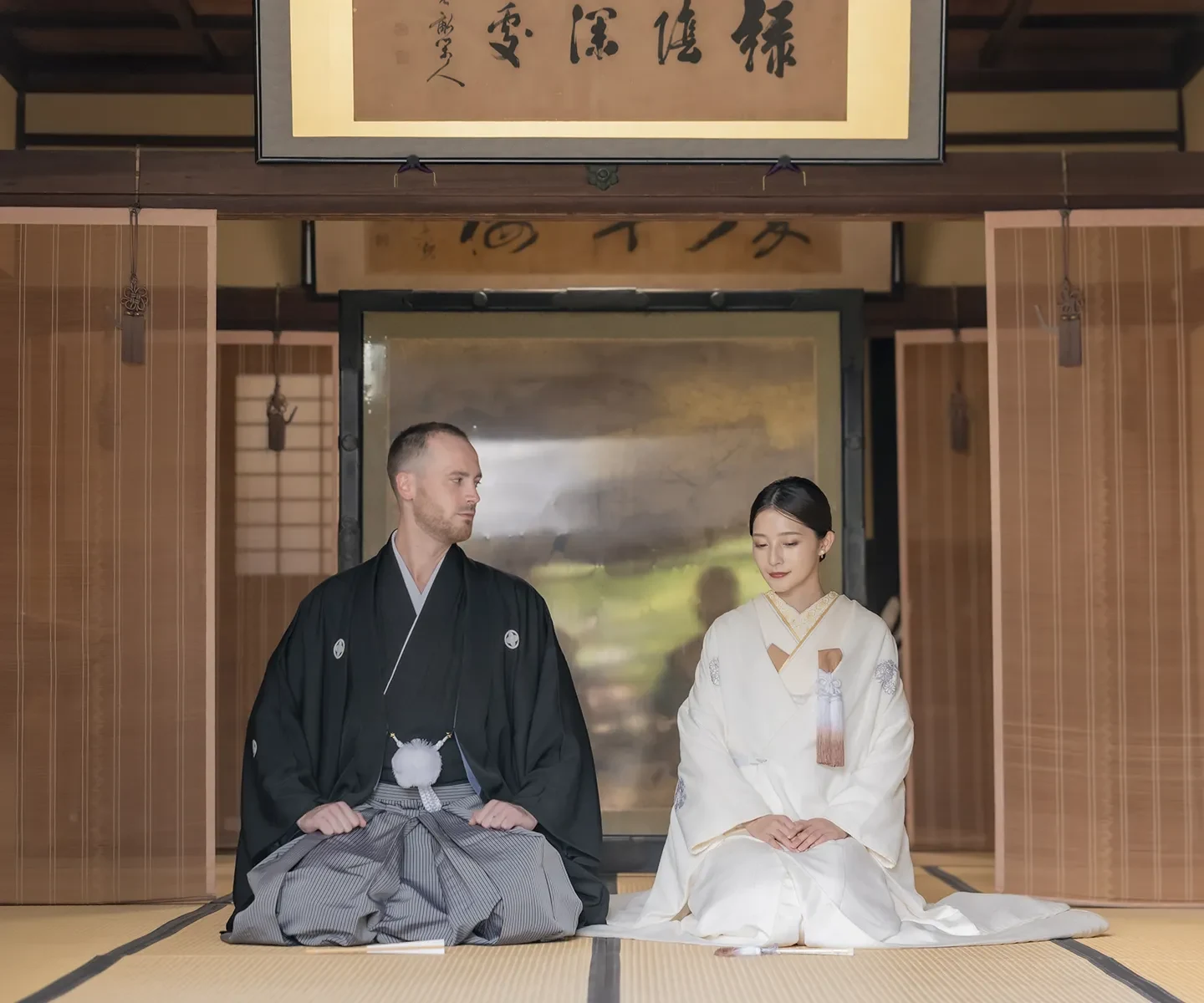
The bride wears shiromuku, the all-white silk kimono, or the coloured iro-uchikake, with the wataboshi hood or traditional hairstyling. The groom wears montsuki haori hakama. Fitting and professional dressing happen in Kyoto before the day, so you source nothing. Dressing and hair take a couple of hours that morning, and they are part of the experience.
A kaiseki meal at a historic Kyoto ryōtei: multi-course, seasonal, served in a private room at a restaurant that has hosted wedding parties for generations, a short walk or ride from the shrine. It is what turns a 45-minute rite into a wedding day, and it is the answer to what you do with your parents. It works just as well for two.
We work with a small group of Kyoto shrines, among them a UNESCO World Heritage site that is the city's oldest, standing in ancient forest within Kyoto itself; a second World Heritage shrine with roots in the 8th century; and one that enshrines a married pair of deities, which we think earns its place on a wedding page. We match the shrine to the day you describe.
None of them take direct bookings in English. We handle availability, the liaison with the shrine, and everything on the day.
Shrine halls are intimate by design: the ceremony suits the two of you, or you and a small group of family. It is a ceremonial wedding, and most international couples handle the legal paperwork at home. Our guide to getting married in Japan covers exactly how. Spring and autumn book out furthest ahead, so for those windows, enquire early.
Planning from
$5,000 USD
Our fee for planning and coordinating your elopement. Venue and vendors are quoted separately, so you see every line.
Questions
Yes. Two non-residents can marry in Japan and it is recognised at home in most countries. The paperwork runs through your embassy and the local ward office, and the documents depend on your nationality. Each nationality follows a slightly different route. We walk you through yours and handle the Japanese-language side. Many couples register legally at home and treat the day in Japan as the ceremony; both are completely normal, and we'll tell you which is simpler for you.
Our planning starts at $5,000 USD. That's our fee for planning and coordination. Venue, photographer, florist, hair and makeup and any other vendors are quoted separately so you can see every line and adjust it. The first call is about your vision, not a quote. Once we know what you actually want, we put together a detailed proposal with a real, itemised number.
Three to six months is comfortable. Cherry blossom season (late March to early April) and autumn colour (November) book out furthest ahead and carry premium venue pricing. We've turned around beautiful days in under two months when dates were fixed, so ask even if you think you're late.
No. That's most of what you're hiring us for. Every vendor conversation, contract, permit and on-the-day instruction runs through us in Japanese. You deal with us in English.
Of course. Most of our elopements are just the two of you, or the two of you plus parents and a couple of close friends. Past roughly a dozen guests the planning shifts into wedding territory and we'd quote it that way, but there's no hard cutoff, and the day is yours to shape.
Married in Japan is Juri and Eamon, a bilingual husband-and-wife team based in Tokyo. Juri is Japanese and runs the vendor and venue side in her own language; Eamon is your point of contact for the planning. We're small enough that the people you meet on the first call are the people who run your day.
Then you want our weddings page: ceremonies with guests, packages by guest count, and what couples spend all in.
Thirty minutes, no obligation. You'll come away knowing what eloping in Japan actually involves, whether or not you plan it with us.
Book your free consultationBilingual planners based in Tokyo · For couples from around the world